Caring for Your
Northgrove Pieces
Every Northgrove piece is crafted from solid, unlacquered metal — a living material that develops character over time. Proper care is simple and ensures your pieces age beautifully for generations.
Material Guide
Unlacquered
Brass
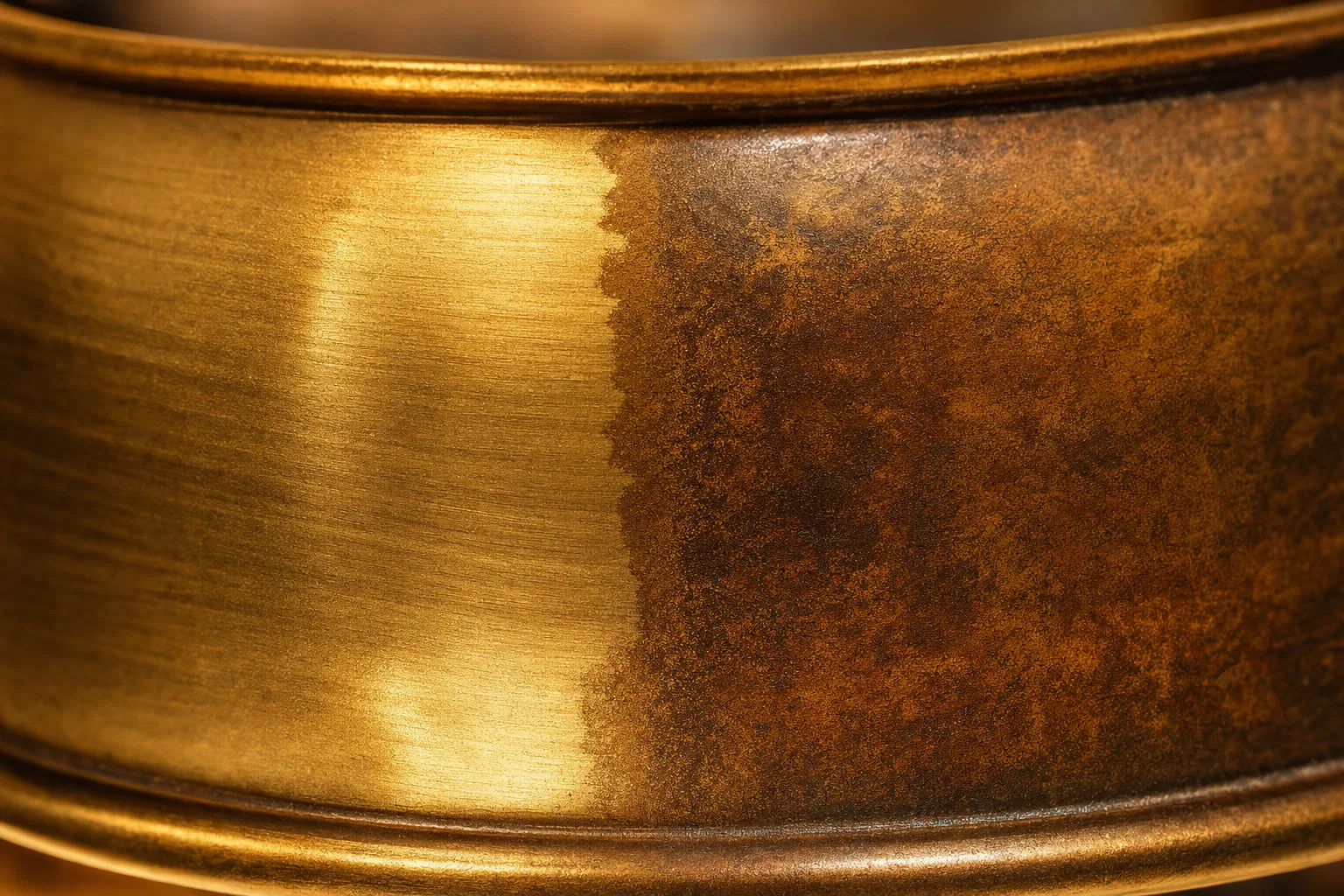
Our brass is solid, unlacquered, and untreated — exactly as it leaves the hands of our Moroccan artisans. This means it will develop a natural patina over time, shifting from bright gold to a rich, warm amber. The process is gradual, entirely natural, and entirely unique to each piece and environment.
Daily Care
Routine Maintenance
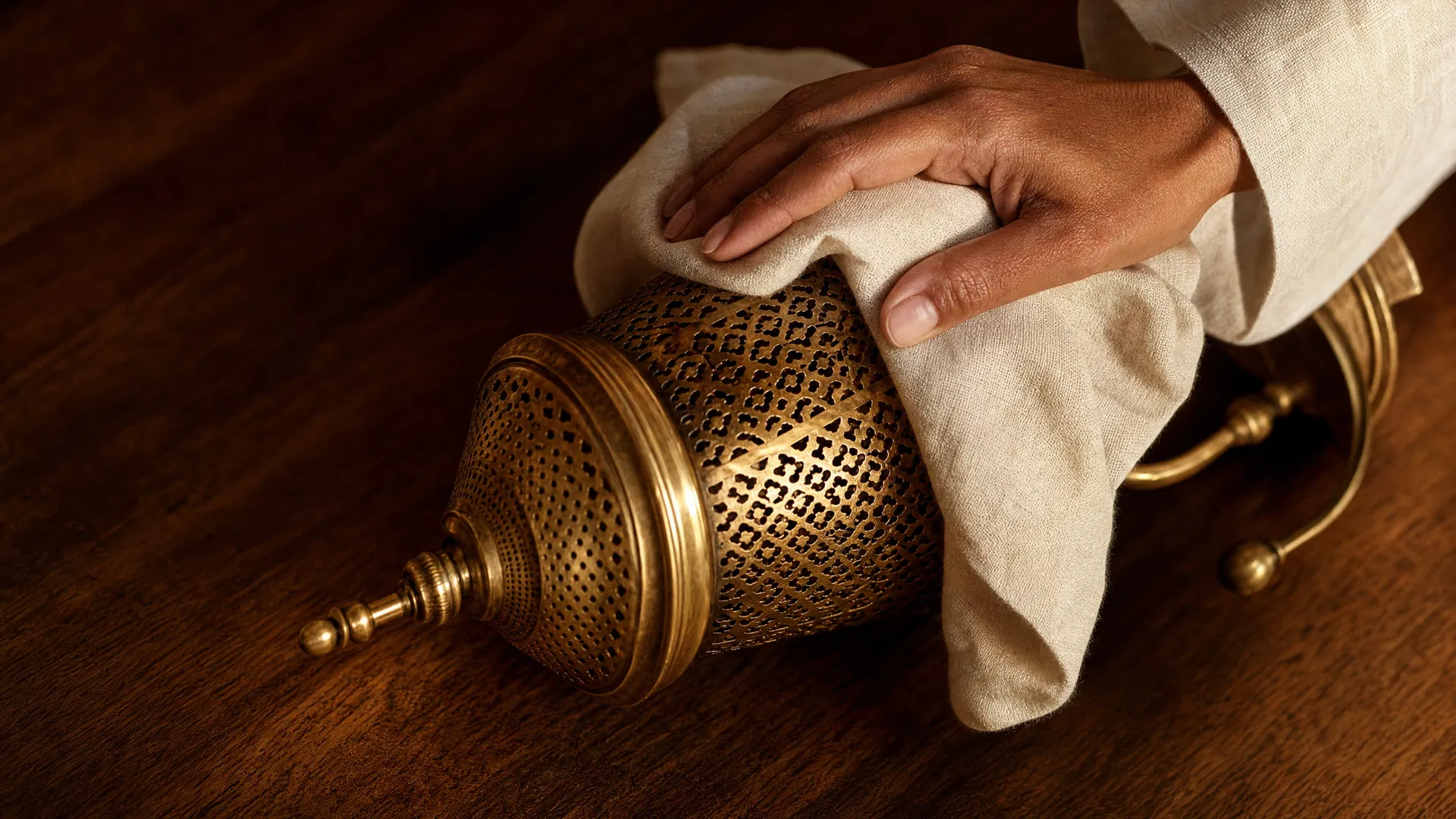
Wipe surfaces with a soft, dry microfibre cloth to remove dust and fingerprints. For kitchen and bathroom fixtures, a quick wipe after use prevents water spots from forming.
The natural oils from your hands actually contribute to patina development — this is a feature of living brass, not a problem to solve.
Deep Cleaning
Thorough Refresh
Mix equal parts white vinegar and warm water. Apply with a soft cloth, working in gentle circular motions. Rinse with clean water and dry immediately.
For stubborn spots: make a paste of equal parts flour, salt, and white vinegar. Apply, leave for 10 minutes, then rinse and dry thoroughly. Never use steel wool or abrasive pads.
Understanding Patina
The Living Finish
Patina begins as a subtle darkening within the first few weeks and gradually develops into a rich, warm tone over 6–12 months. The speed and character depends on humidity, touch frequency, and environment.
High-humidity bathrooms develop patina faster than dry living spaces. Each piece's patina is entirely unique — embrace the variation.
What to Avoid
Protect the Finish
Avoid harsh chemical cleaners, bleach, ammonia-based products, and abrasive scrubbing pads.
Do not use lacquer or sealant — these prevent natural patina from developing and may yellow or crack over time. Avoid prolonged contact with acidic substances such as lemon juice or tomato sauce.
Material Guide
Aged
Copper
Our copper pieces carry an artisan-applied aged finish that gives each piece its distinctive warm, reddish-brown depth. This finish is intentional and irreplaceable — it represents hours of careful work by our craftspeople in Marrakech. Care should be gentle and preserving, not restorative.
Daily Care
Routine Maintenance
Dust regularly with a soft, dry cloth. For copper fixtures in wet environments, wipe dry after each use to control the speed of further patina development.
A light coating of beeswax applied every few months provides subtle protection while enhancing the copper's natural warmth and depth.
Deep Cleaning
Gentle Refresh
Create a gentle cleaning paste using lemon juice and baking soda. Apply with a soft cloth, let sit for 5 minutes, then rinse with warm water and dry thoroughly.
For aged copper finishes, use only warm water and a soft cloth — aggressive cleaning may remove the intentional patina applied by our artisans.
Beeswax Protection
Seasonal Treatment
Apply a thin layer of natural beeswax to copper surfaces every 3–4 months using a soft cloth. Work in small circular motions, then buff gently with a clean cloth.
This creates a breathable barrier that slows oxidation while preserving the natural warmth and depth of the aged finish.
What to Avoid
Protect the Finish
Never use abrasive cleaners, steel wool, or harsh chemicals on copper. Avoid chlorine-based products which can cause green discolouration.
Do not use commercial copper cleaners on aged or antiqued finishes — these are designed to strip patina and will permanently damage the artisan-applied finish.
The Patina Journey
How Your Piece
Evolves Over Time
Patina is not a sign of age — it is a sign of life. The transformation from polished gold to rich amber is gradual, natural, and entirely unique to your piece, your home, and your daily rituals. No two pieces will ever look the same.
Day 1
Polished Gold
Bright, reflective, warm yellow-gold. The surface as it leaves our atelier.
Weeks 2–6
First Shift
Subtle darkening begins in areas of frequent touch. A gentle warmth emerges.
Months 3–6
Amber Depth
Rich amber tones develop. The surface gains depth and variation. Character is forming.
12+ Months
Full Patina
A deep, complex finish unique to your piece. The living finish is complete — and still evolving.
Quick Reference
Care At a Glance
- Wipe with a soft, dry microfibre cloth regularly
- Dry fixtures after water contact to control patina speed
- Use a diluted white vinegar solution for deeper cleaning
- Apply natural beeswax to copper pieces every few months
- Embrace fingerprints — they contribute to the living finish
- Allow patina to develop naturally over 6–12 months
- Contact us for guidance on restoration or unusual changes
- Harsh chemical cleaners, bleach, or ammonia-based products
- Abrasive scrubbing pads or steel wool
- Lacquer, sealant, or any coating that prevents patina
- Prolonged contact with acidic substances (lemon, vinegar, tomato)
- Commercial copper cleaners on aged or antiqued finishes
- Chlorine-based products which cause green discolouration
- Aggressive polishing that removes the artisan-applied finish
Need Guidance?
We're Here to
Help You Care
If you have questions about caring for your Northgrove pieces, or if a piece needs professional restoration, our team can provide personalised guidance based on your specific piece and environment.
Get in Touch